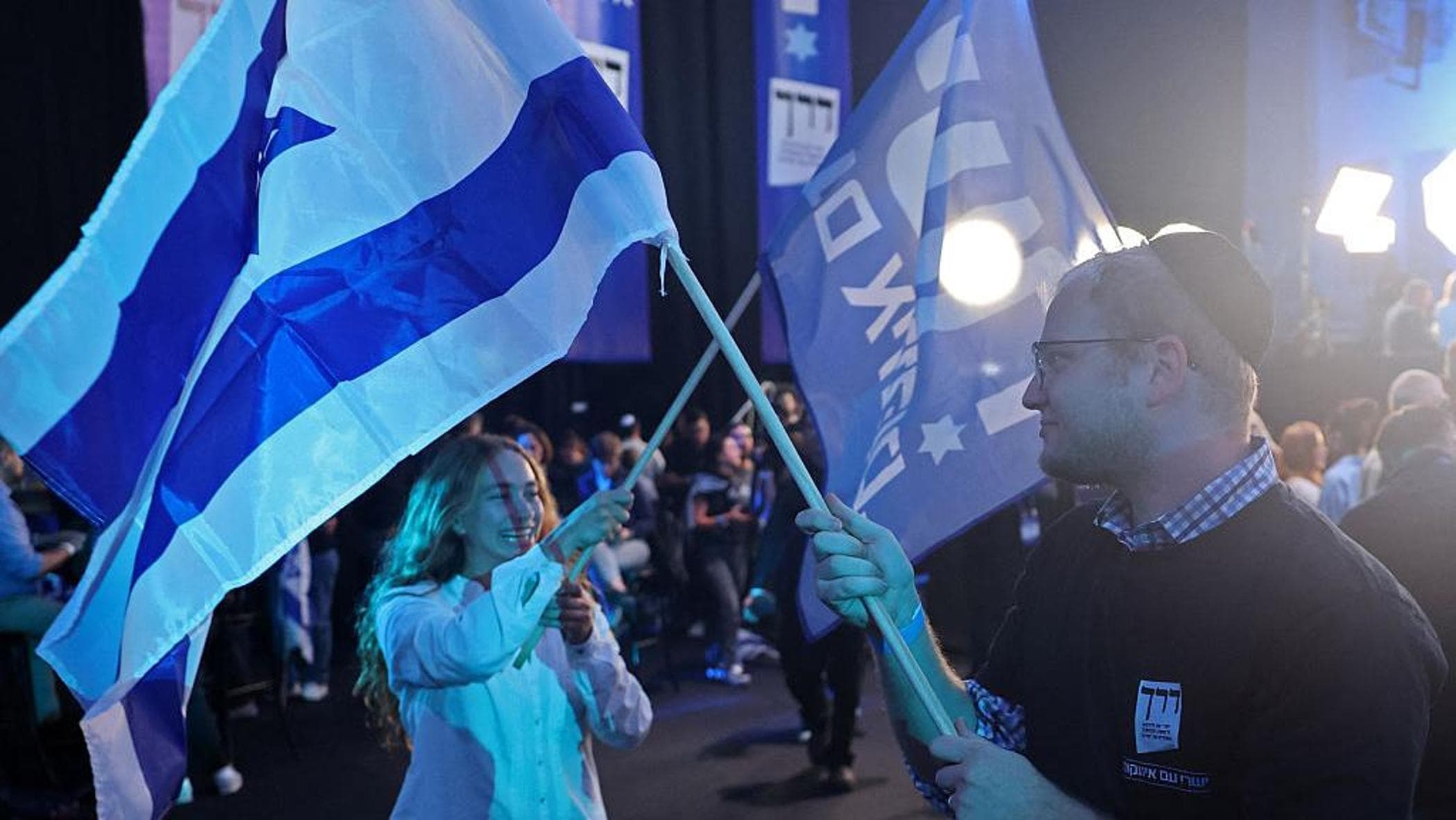
Israel's central elections committee reported on Wednesday that parties backing Prime Minister Benjamin Netanyahu held a lead over the opposition bloc as counting continued, according to la Repubblica. With 76.8% of ballots tallied, the Netanyahu-aligned parties stood at 54 seats, the bloc led by Gadi Eisenkot at 47, and Arab parties at 19, the paper reported.
The count has shifted through the day. Earlier figures released at different stages of the tally put the gap at varying widths, and the committee's partial results were revised as more votes were processed. Initial exit polls had shown the two camps level, la Repubblica reported, before the premier's side moved ahead as counting progressed.
Why it matters
The outcome will shape who forms Israel's next government and whether Netanyahu remains in office. Neither bloc has reached the 61 seats needed for a majority in the 120-seat Knesset on the figures reported so far, leaving the Arab parties — which have signalled willingness to support a government from outside or join a coalition — in a potentially decisive position.
The result also carries economic weight. Tel Aviv's TA-125 index fell 1.7% and the TA-35 lost 1.5%, while the TA-90 dropped 3% and the insurance index fell 4.1%, The Times of Israel reported. The shekel weakened about 1% against the dollar to roughly 3.0843. Ronen Menahem, chief markets economist at Mizrahi Tefahot bank, told The Times of Israel that political uncertainty was driving the moves and that investors would look for a stable coalition able to set fiscal policy and budget priorities.
Rival camps and a contested count
Eisenkot, the opposition leader, said a leader worthy of the office would have resigned, according to la Repubblica. Netanyahu celebrated but said he was waiting for the final results.
Yair Golan, leader of the Democrats, urged the opposition to reach an agreement with Arab-Israeli parties to build a government. Writing on X, he said there was an opportunity to form a government of change in partnership with Arab citizens of Israel, and that courage and leadership were needed. In a separate post he argued that Netanyahu had lost, counting the opposition and Arab seats together against the premier's bloc.
The Arab parties had said before the vote they were open to joining a coalition or backing a minority government from outside, but Eisenkot rejected the idea at the time, la Repubblica reported. One Arab list leader was reported to have been contacted by both blocs.
Attention is also on the far right. Corriere della Sera reported disappointment among supporters of Itamar Ben-Gvir over a result that fell short of the breakthrough his camp had hoped for.
What remains to be counted
The committee expects the remaining ballots to be processed during the day, but the so-called double envelopes — postal and absentee votes — may not be fully counted until Friday, according to la Repubblica. The committee estimates there are about 600,000 such ballots, a marked increase on the 2022 election. With each Knesset seat worth roughly 40,000 votes, these envelopes could alter the final picture.
Most of those votes come from Israel Defense Forces personnel, The Times of Israel noted, and traditionally they do not favour Arab or ultra-Orthodox Haredi parties. The double envelopes also include ballots from prisoners, medical staff, people with illnesses and Israeli representatives on missions abroad. Counting of soldiers' votes alongside other postal ballots was due to begin on Wednesday evening.
Abroad, US President Donald Trump said he had not yet spoken with Netanyahu but was upbeat about the Likud leader's showing. Speaking to reporters at Joint Base Andrews in Maryland, Trump said he had heard Netanyahu did very well and that the race was close, adding that it was still early and the outcome could be a stalemate or a win, according to la Repubblica.
In Belgrade, authorities declared a red terrorism alert following an attack on Israel's embassy, la Repubblica reported.
Watch for the double-envelope count due by Friday, and for whether the Arab parties' 19 seats are drawn into a coalition or left supporting a minority government from outside.